- Type
- Beach
- Area
- Maragogi
- Free access
- Yes
- Depends on the tide
- Yes
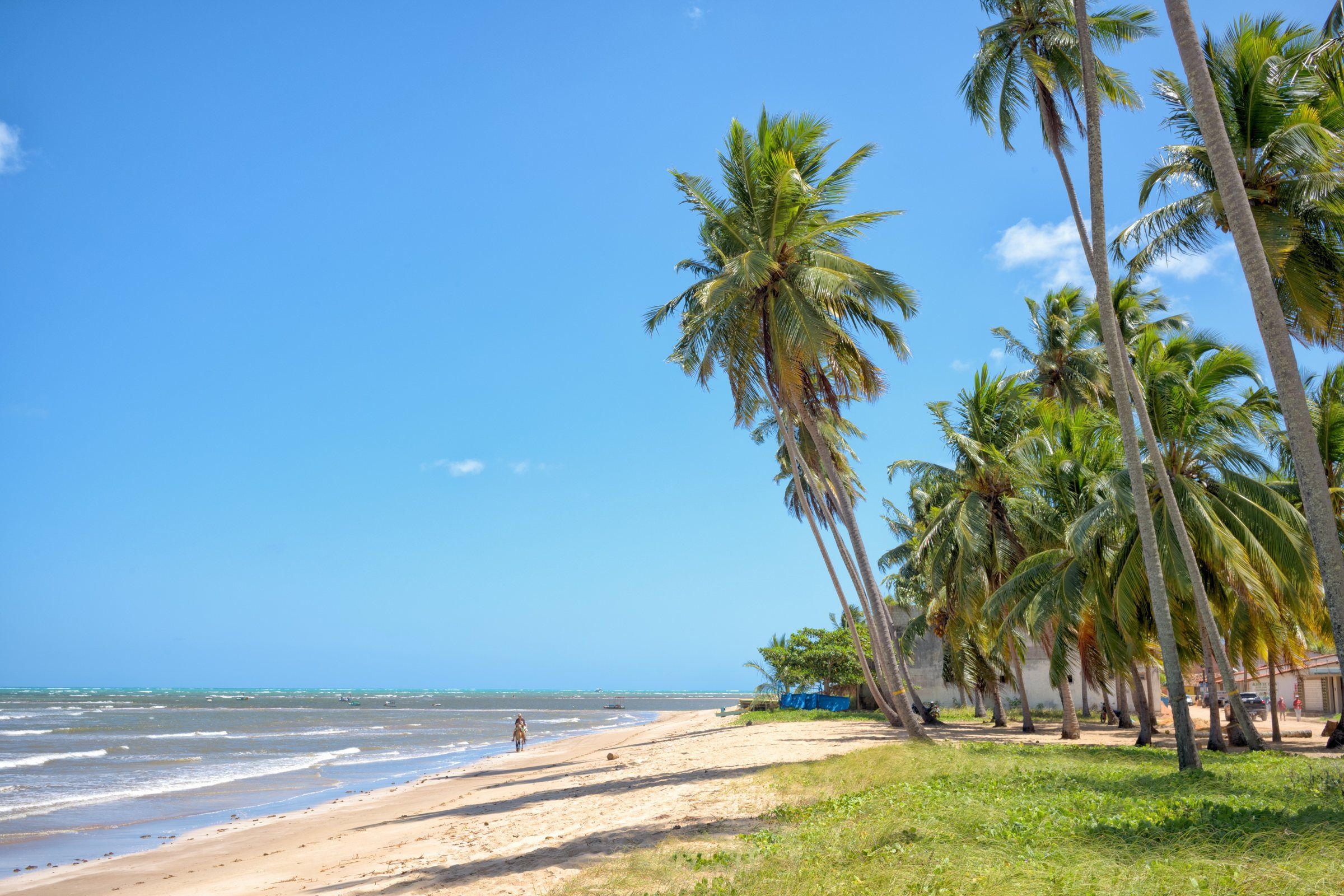
São Bento is Maragogi’s southernmost village. AMA (the Association of Alagoas Municipalities) describes it as the first beach to the south, past the bridge over the Salgado River, which separates Maragogi from Japaratinga. It’s a bucolic village where many fishermen still make their living from fishing, and which in recent decades has started to welcome tourists.
The beach brings together three attractions: the calm sea, the São Bento sandbank at low tide and the ruins of a 17th-century monastery.
São Bento in numbers
| What | Figure | Source |
|---|---|---|
| Distance from the center | about 5 km to the south, in a straight line | calculated from OpenStreetMap coordinates |
| Border | the Salgado River, with Japaratinga | AMA and Tribuna Hoje |
| São Bento sandbank | about 2 km offshore | Tribuna Hoje |
| Tide for the sandbank | up to 0.6 m | Tribuna Hoje |
| Monastery | construction dated to 1634 | Tribuna Hoje |
What the beach is like
Tribuna Hoje calls São Bento an invitation to relax. The sea is protected by the reefs and the shoreline is that of a village, with fishing boats on the sand. Tourist facilities are fewer than in the center.
The São Bento sandbank
The sandbank (croa) is a bank of coral and sand that appears at low tide. According to Tribuna Hoje, it lies about 2 km offshore and is visited in small motorboats, only with a tide of up to 0.6 m. The trip lasts about two hours. There, you can watch fish with a mask.
Plan with the Maragogi tide table. If you’re choosing between the sandbank and other pools, see which natural pool to choose.
The monastery ruins
The ruins of the São Bento monastery are in the village, near the beach, and are marked on OpenStreetMap. Tribuna Hoje dates the construction to 1634 and says the church served as a resting place for clergy traveling on horseback between Olinda and Porto Calvo. The building is also said to have played a defensive role against French and Dutch pirates. The restoration of the ruins was handed over to the community in November 2020, according to the same newspaper.
IBGE’s history records battles against the Dutch at Barra Grande and São Bento. Learn more in history of Maragogi.
A taste of the village
Tribuna Hoje mentions bolinhos de goma, or sequilhos, as a São Bento tradition. They’re handmade biscuits made with tapioca starch, coconut milk, egg yolk and sugar, sold in the village.
How to get there
From central Maragogi, take the AL-101 Sul, passing Camacho Beach. Maragogi Beach is a few minutes away by car. On the other side of the Salgado River, Japaratinga begins, with Japaratinga Beach. The full overview is in Maragogi beaches.
Precautions
São Bento lies inside the Costa dos Corais APA.
- don’t step on or touch the coral on the sandbank;
- don’t feed the fish;
- pick up all your trash;
- respect the space of the fishermen and the boats on the sand.
Practical tips
- The São Bento sandbank is only visited at low tide: check the tide table before arranging the trip.
- Set aside time for the monastery ruins, a few steps from the beach.
- Try the bolinhos de goma sold in the village, a tradition mentioned by the local press.
- Avoid swimming in the Salgado River channel, where the current changes with the tide.
Frequently asked questions
Where is São Bento Beach?
In southern Maragogi, by the Salgado River, which forms the border with Japaratinga. Based on OpenStreetMap coordinates, it's about 5 km in a straight line from the center.
What is the São Bento sandbank?
A bank of coral and sand that emerges at low tide. According to Tribuna Hoje, it lies about 2 km offshore and is visited in small boats when the tide is up to 0.6 m, on a trip of about two hours.
What are the São Bento monastery ruins?
The remains of a 17th-century Benedictine church. Tribuna Hoje gives 1634 as the year it was built and mentions a restoration handed over to the community in November 2020.
Is São Bento connected to the history of the Dutch?
Yes. IBGE's history records battles against the Dutch at Barra Grande and São Bento, when troops were heading from Recife to Porto Calvo.
Combine with
-
 Free access Maragogi Maragogi Beach (Town Waterfront) Maragogi's town beach is where the bars, restaurants and accommodation are, and it's where the boats to the galés leave from. It's the base for most trips. See details
-
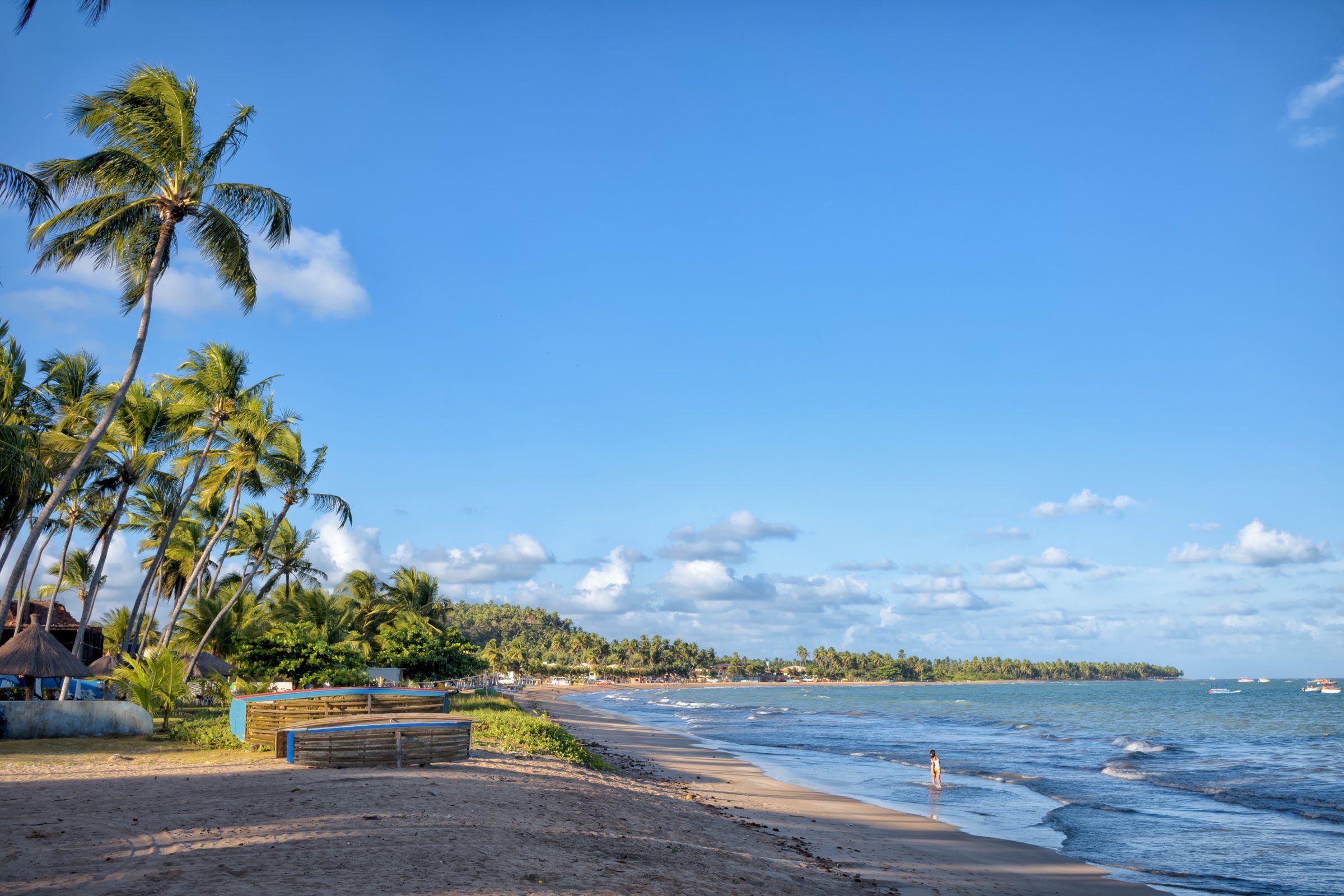 Tide-dependent Coral Coast (Japaratinga to Milagres) Japaratinga Beach The central beach of Japaratinga, Maragogi's neighbor, where trips to the municipality's natural pools leave from at low tide. See details
-
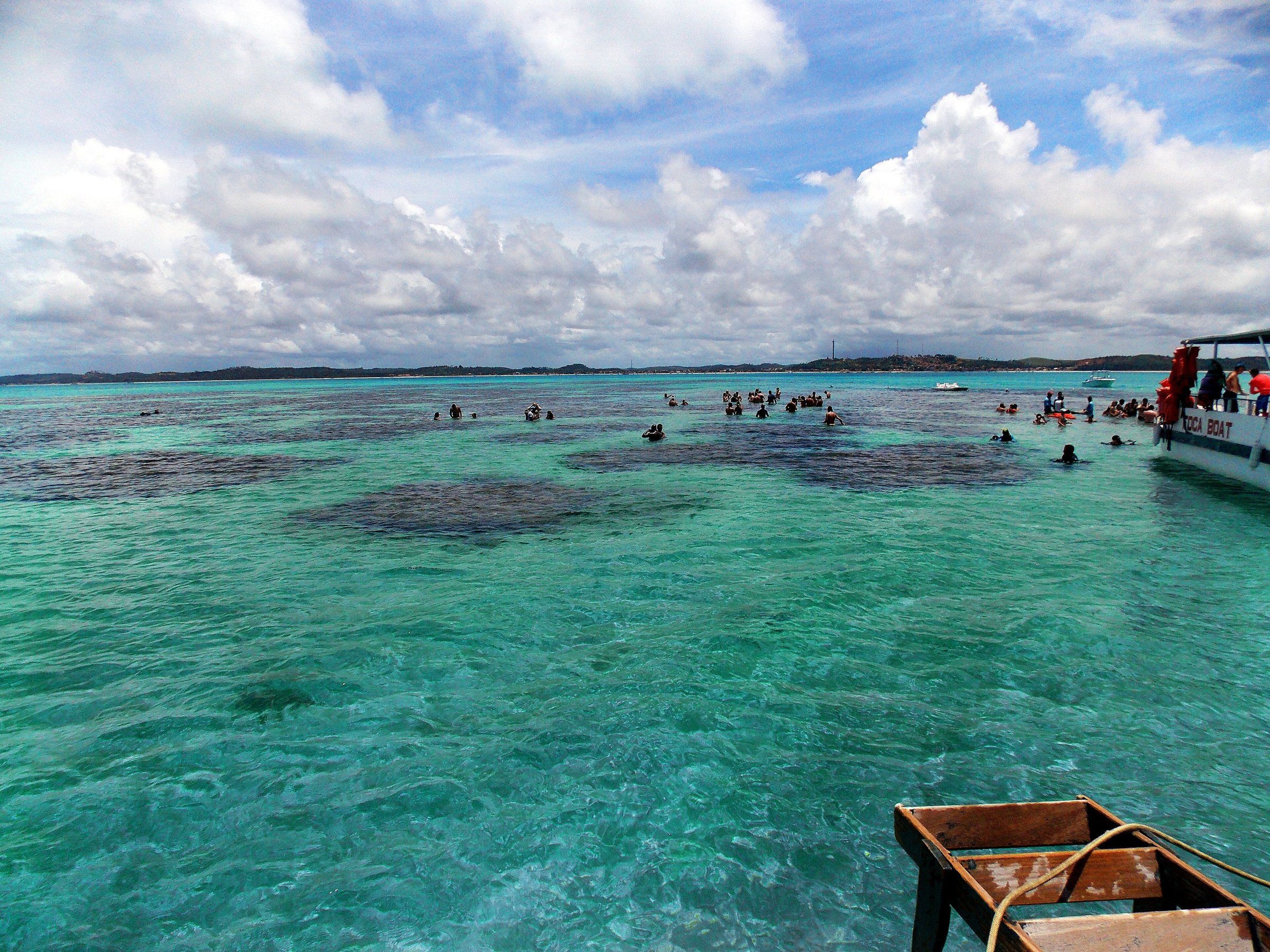 PaidTide-dependent Maragogi The Galés of Maragogi The galés are Maragogi's most visited reef complex. Visits are by boat, depend on low tide and follow ICMBio's rules inside the Costa dos Corais APA. See details